未分類」カテゴリーアーカイブ

2025.07.13

Izayoi

Have you ever heard of a rose called Rosa roxburghii?
One of its variants, Rosa roxburghii plena, is a beautiful rose with many petals.
In Japan, it’s been given a poetic name: Izayoi Bara (十六夜ばら).
The word bara simply means “rose,” while izayoi (十六夜) is a term from classical Japanese literature and poetry.
It refers to the moon that rises one night after the full moon—the sixteenth night.
This moon appears slightly later and is just beginning to wane. That faint “lack” and delay have long been seen as symbols of hesitant love, longing after parting, the quiet approach of aging, or the deepening of life itself.
When the izayoi moon appears in traditional poems like waka or haiku, it often evokes a quiet, incomplete beauty.

In her 13th-century travel diary Izayoi Nikki, the poet Abutsu-ni—a court lady and accomplished female poet—wrote these words while journeying from Kamakura back to Kyoto after the sudden death of her husband:

ゆくりなく あくがれ出でし 十六夜の
月やおくれぬ 形見なるべき

Yukurinaku akugare ideshi izayoi no
tsuki ya okurenu katami narubeki

Unintentionally, my soul wandered out—
drawn by longing,
it drifted after the Izayoi moon.

Has it remained behind,
a keepsake left
by the one I used to be?

This image of the moon—slightly waning, quietly following—captures the essence of izayoi: not just beauty, but beauty touched by time, memory, and loss.
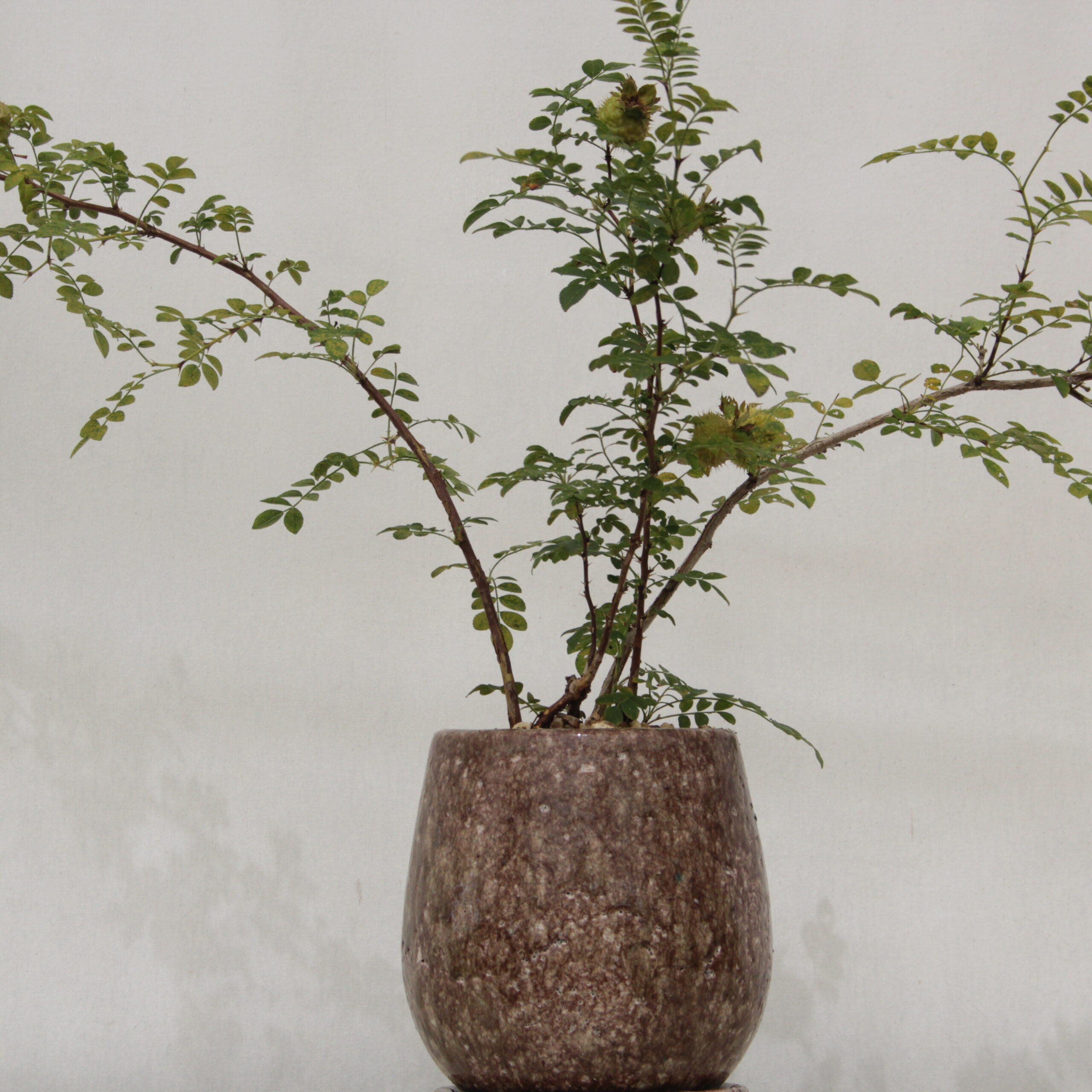
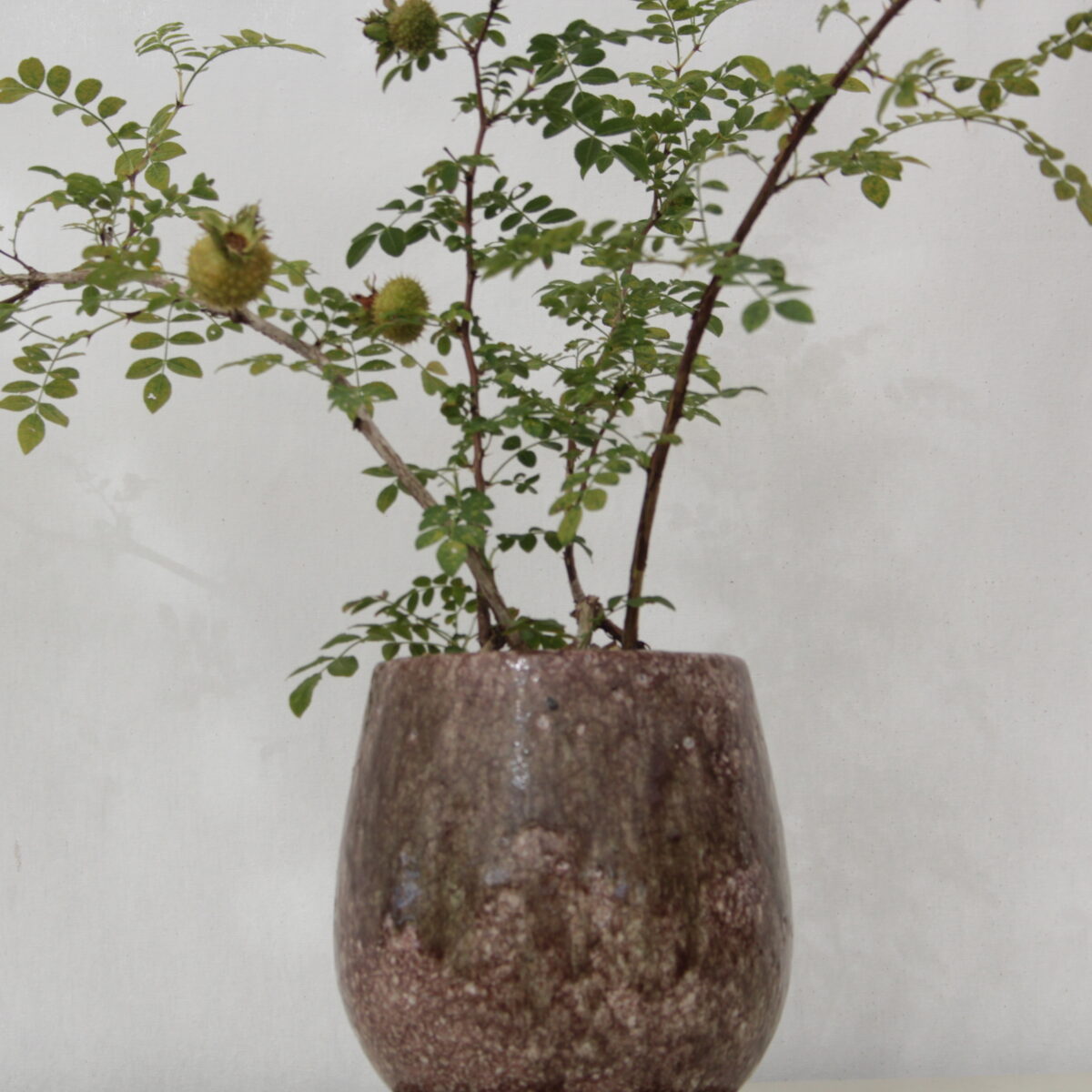
And yet—despite such a delicate and wistful name—the Izayoi Bara has strikingly sculptural branches, leaves, and hips.
I’m deeply drawn to that powerful form as well.
In this piece, I’d like to introduce the Izayoi Rose I love so much, along with some of its closest and most fascinating relatives.

The Three Main Types

The basic forms are these three varieties:

1.Rosa roxburghii plena
2.Rosa roxburghii normalis
3.Rosa roxburghii hirtula

■The Origin of the Name”roxburghii

The genus name “roxburghii” comes from Dr. William Roxburgh (1751–1815), a Scottish physician who served as director at the Calcutta Botanical Garden. He sent specimens of this rose to England, and around 1915—after his death—the rose was officially named Rosa roxburghii. Earlier, Dr. Roxburgh himself had called it Rosa microphylla (“small-leaved rose”), so you might see that in older literature. In English-speaking countries, it’s often known as the “chestnut rose,” referring to its chestnut-like hips.

Its Sculptural Beauty

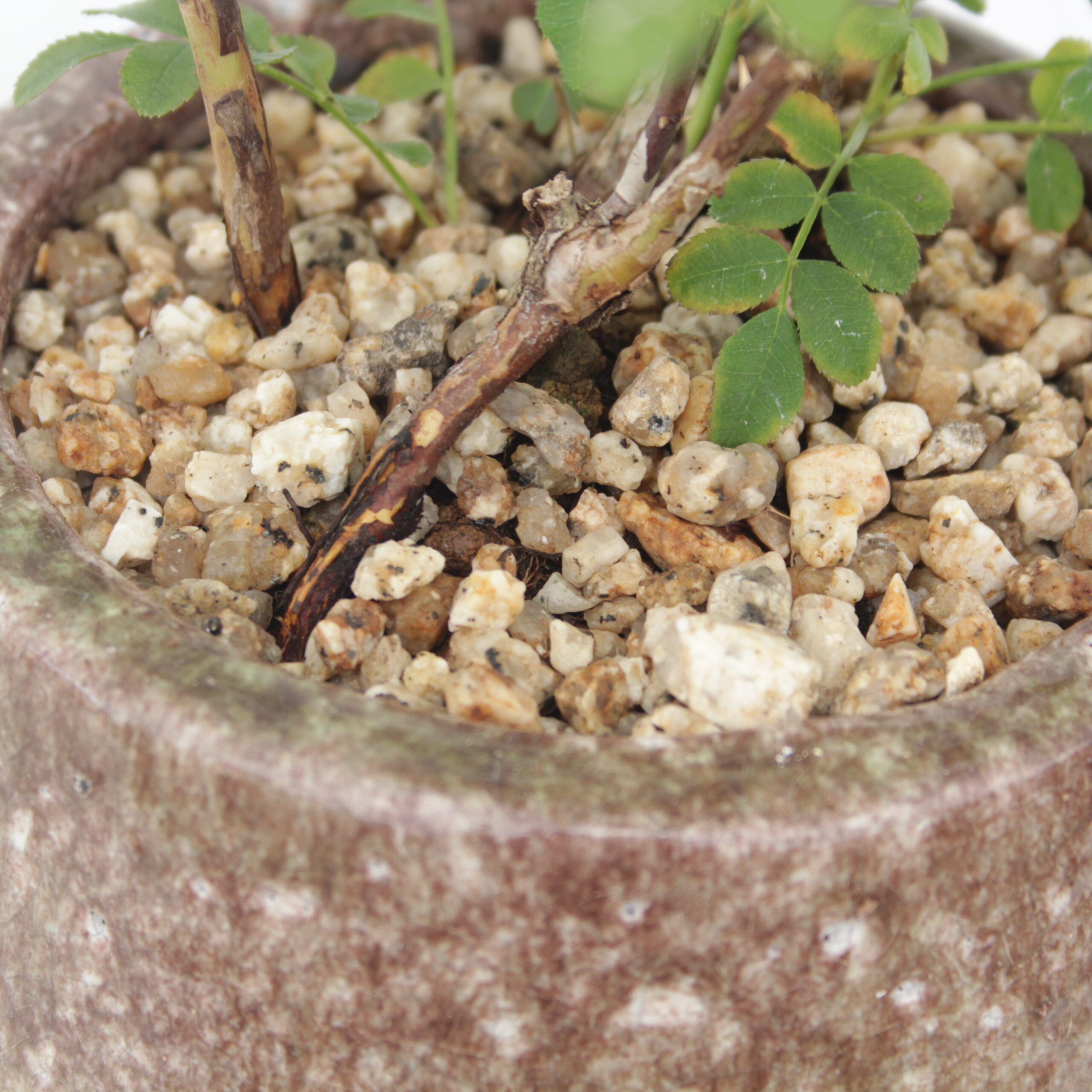
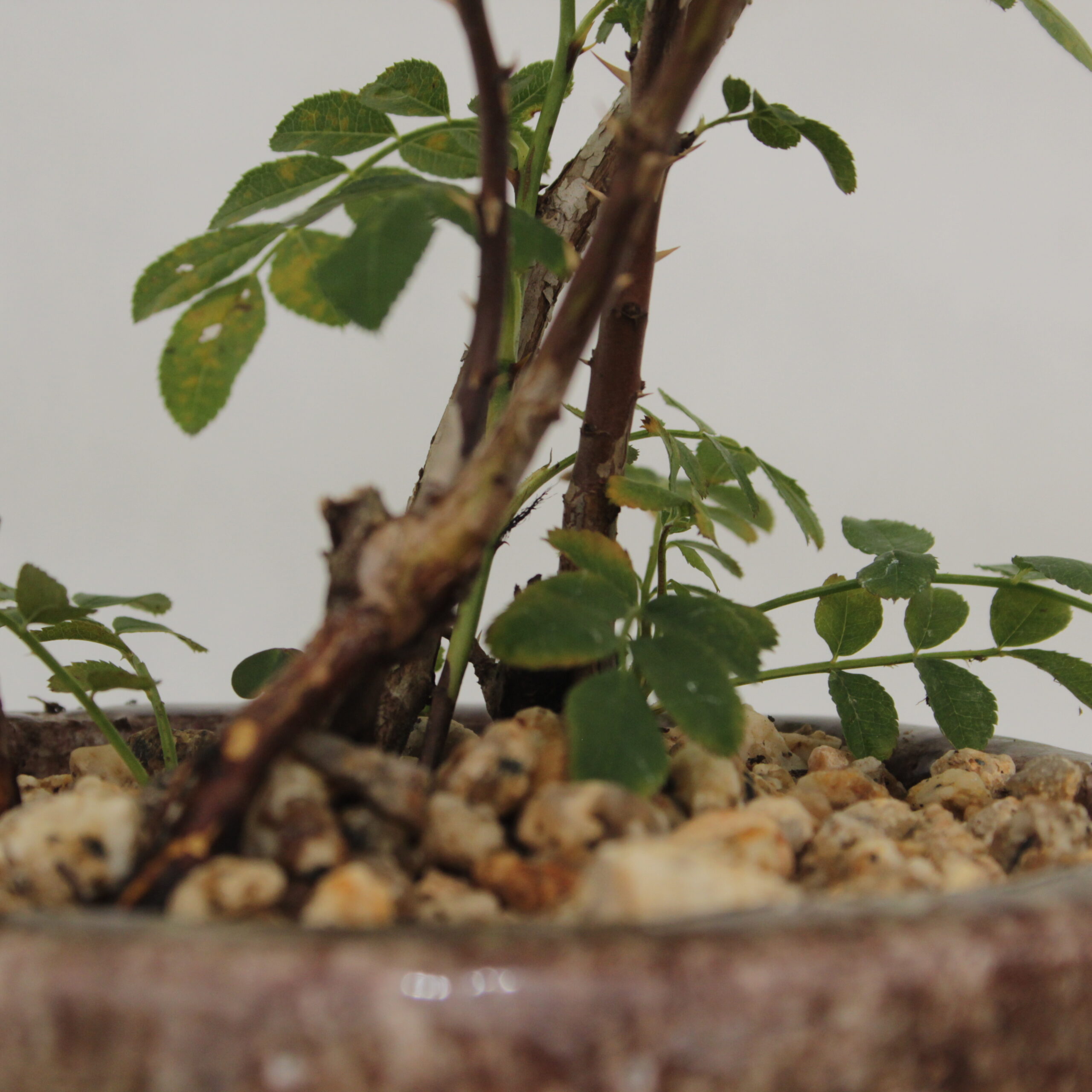
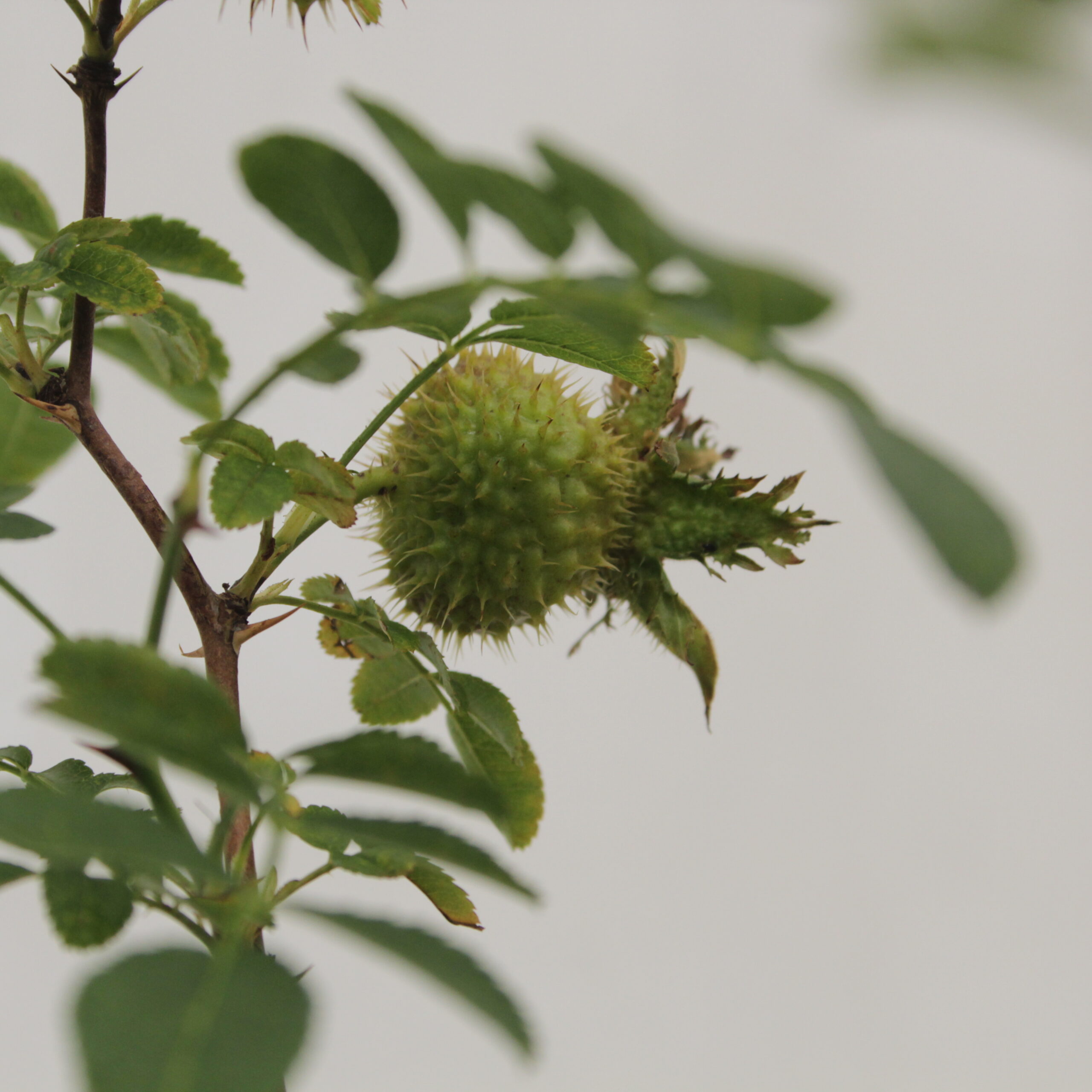
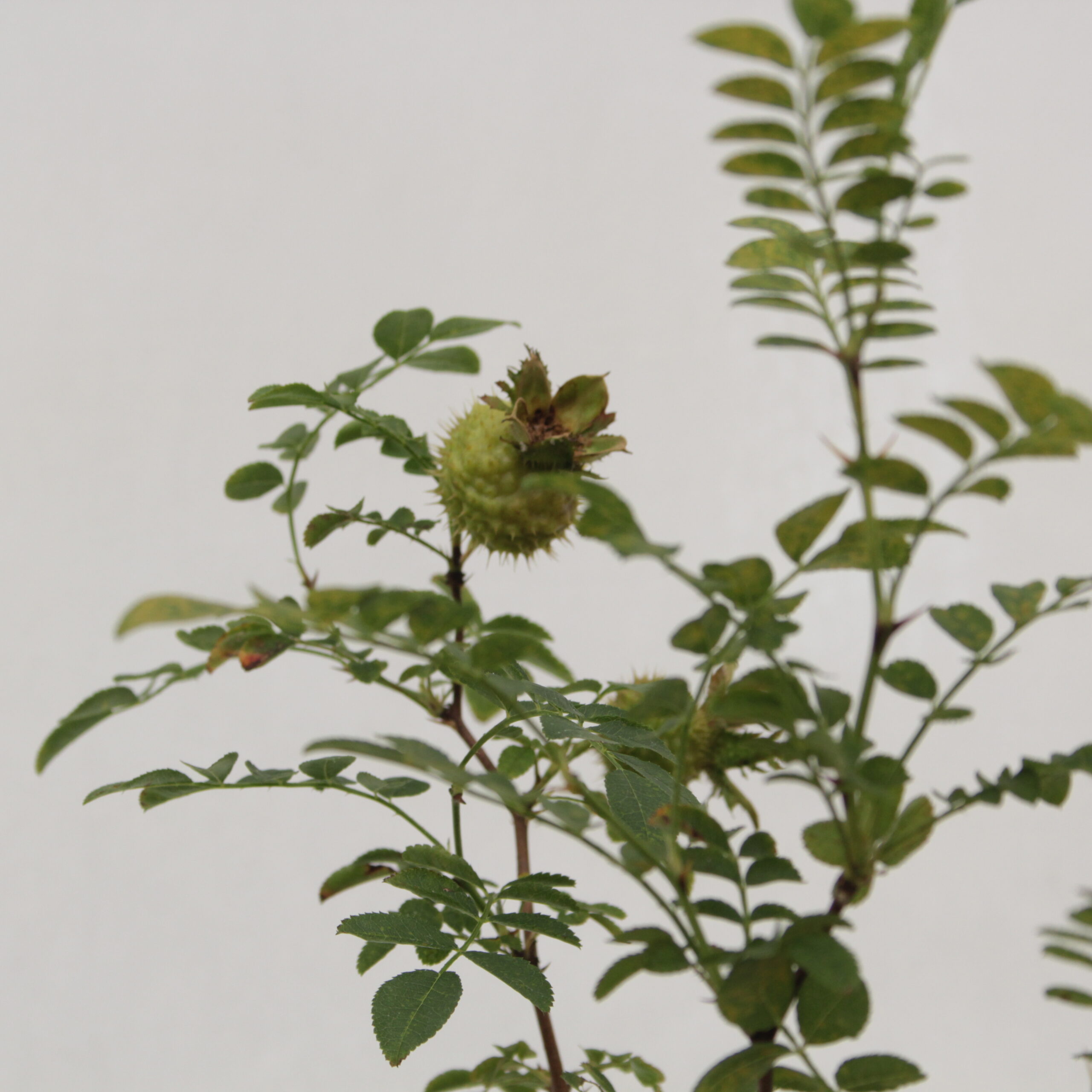
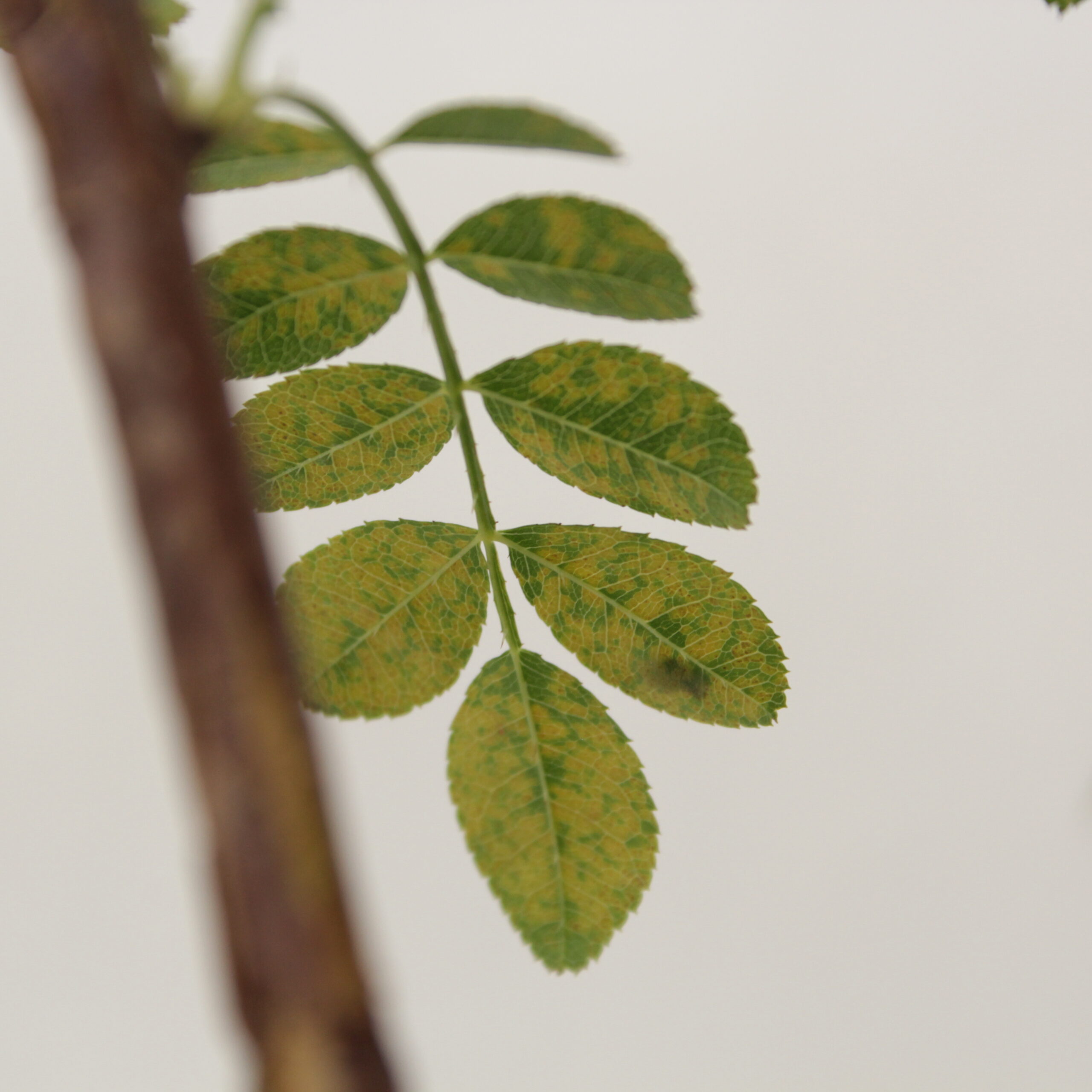
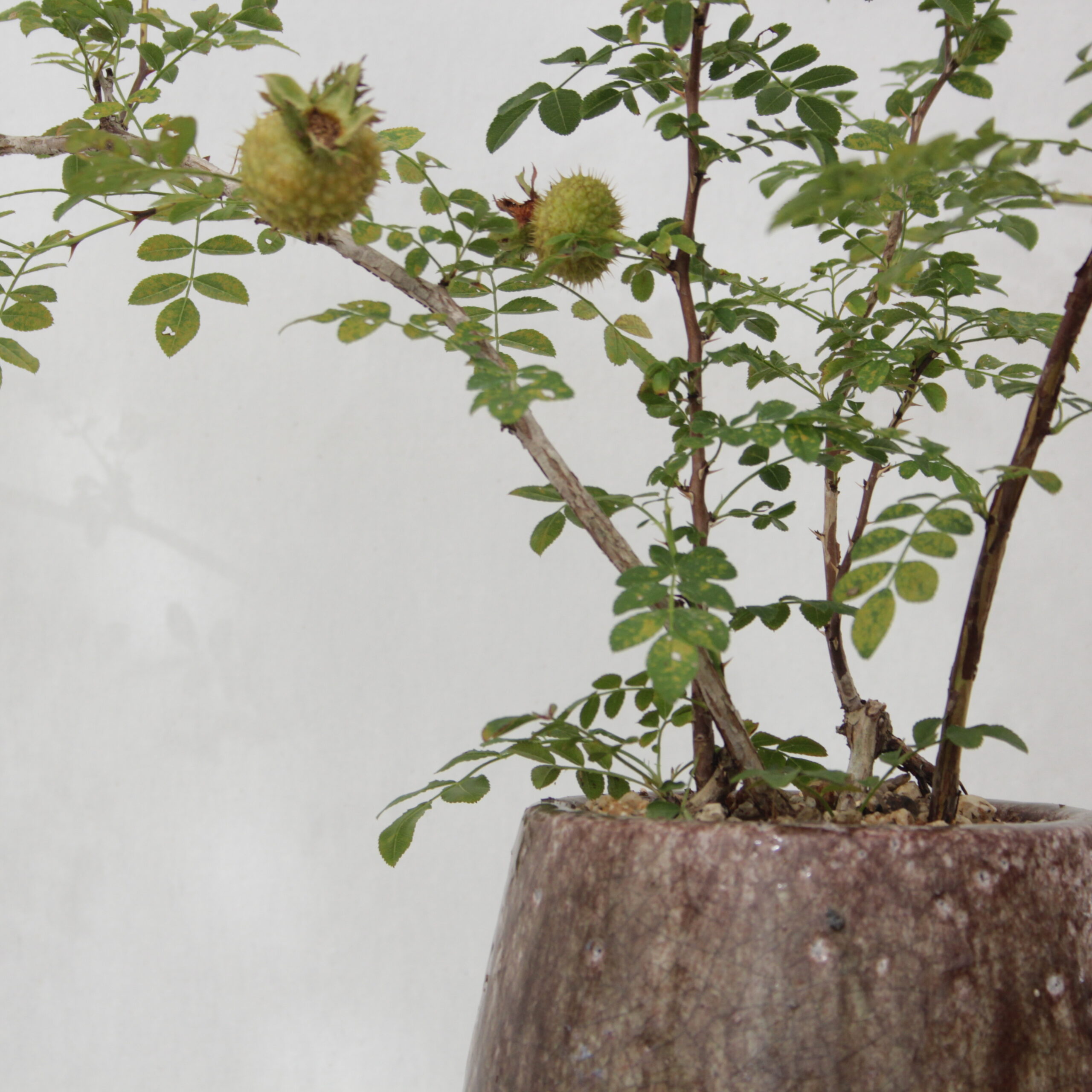
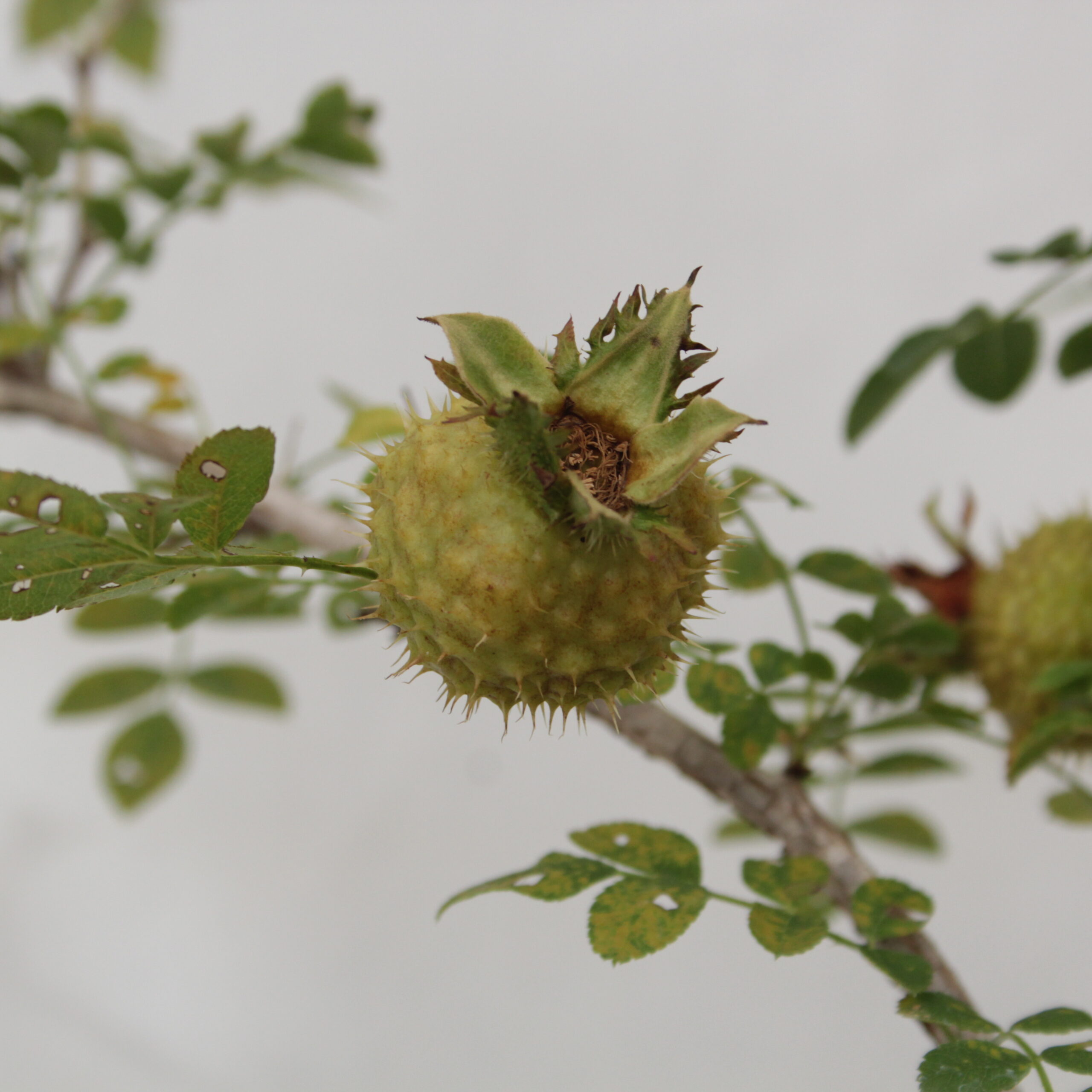
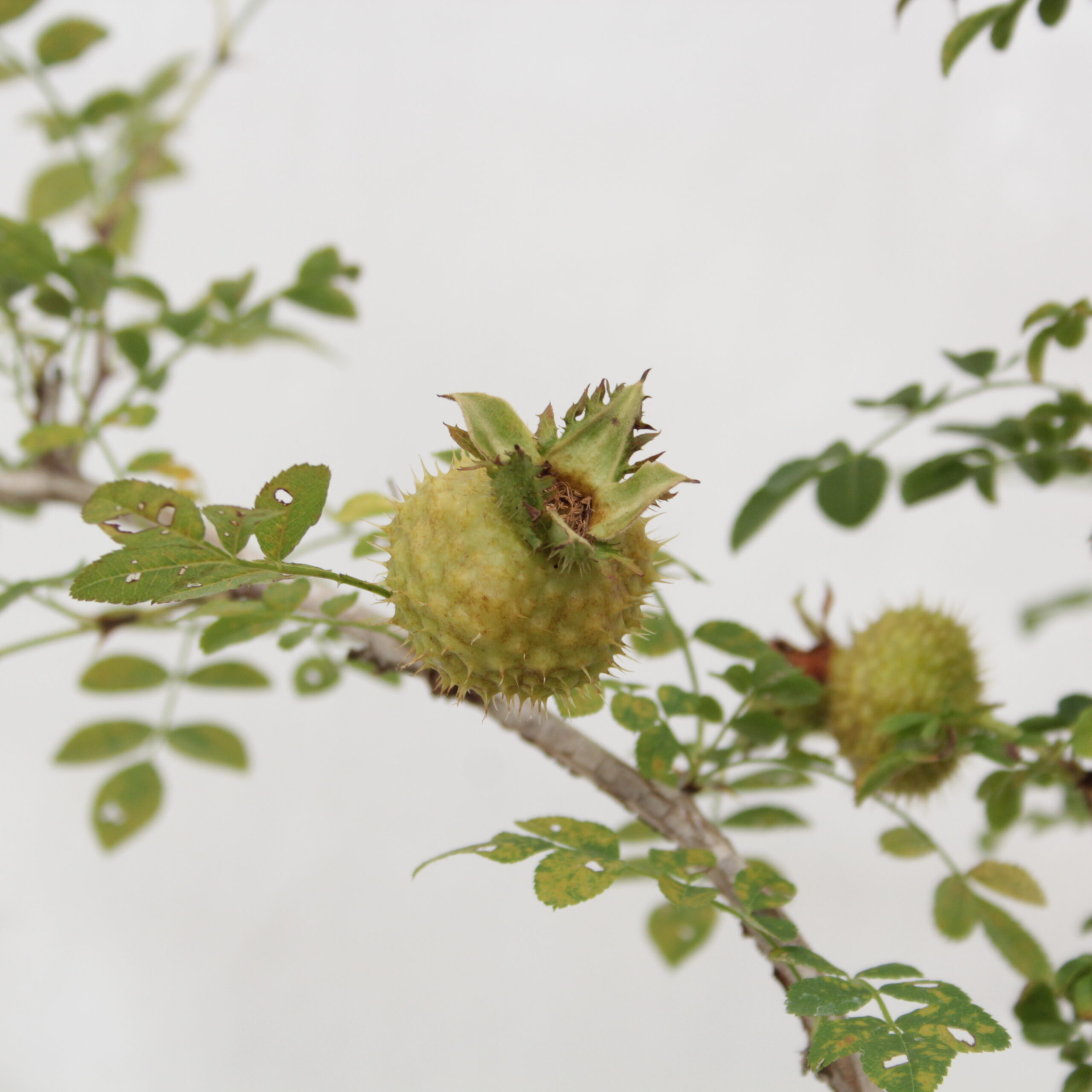
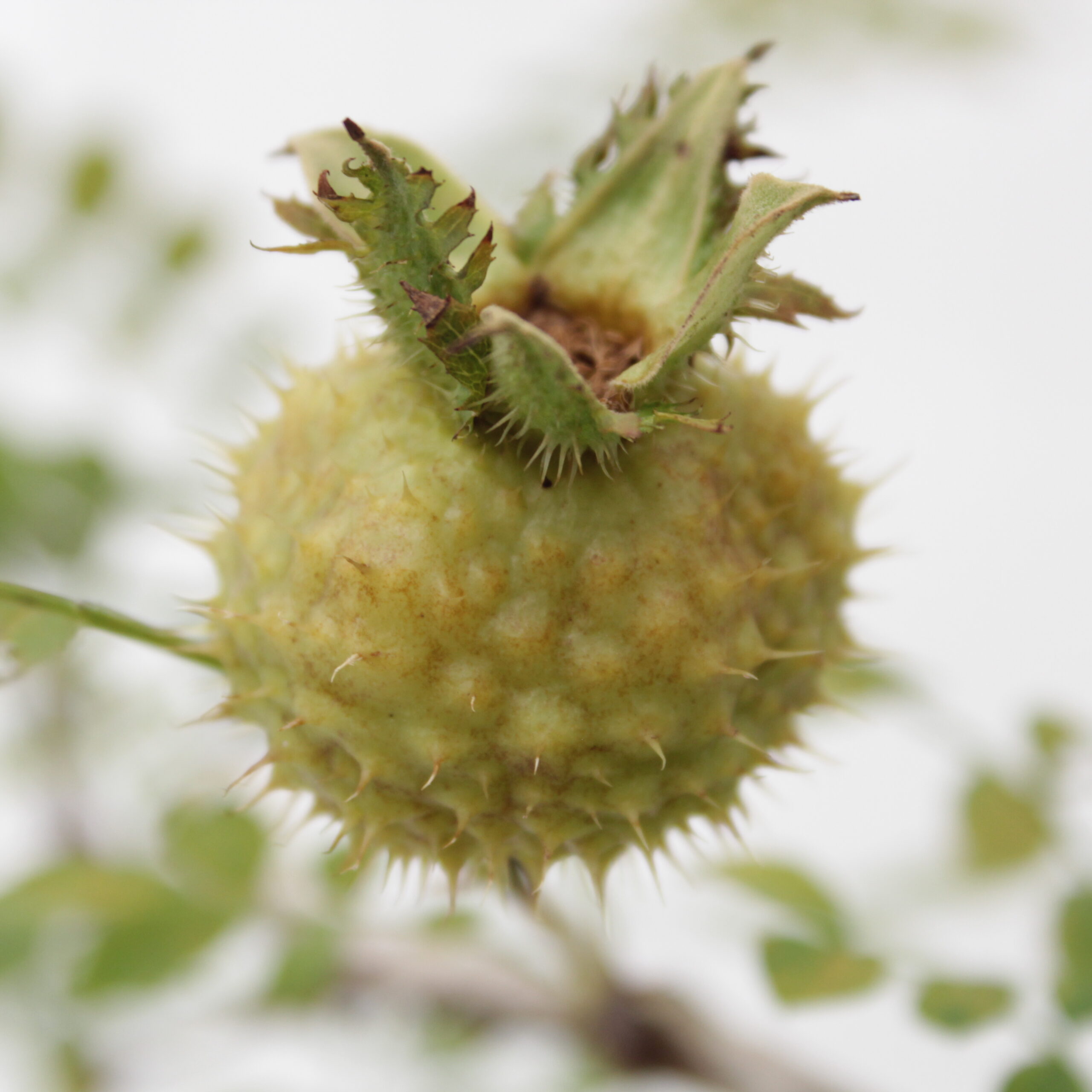
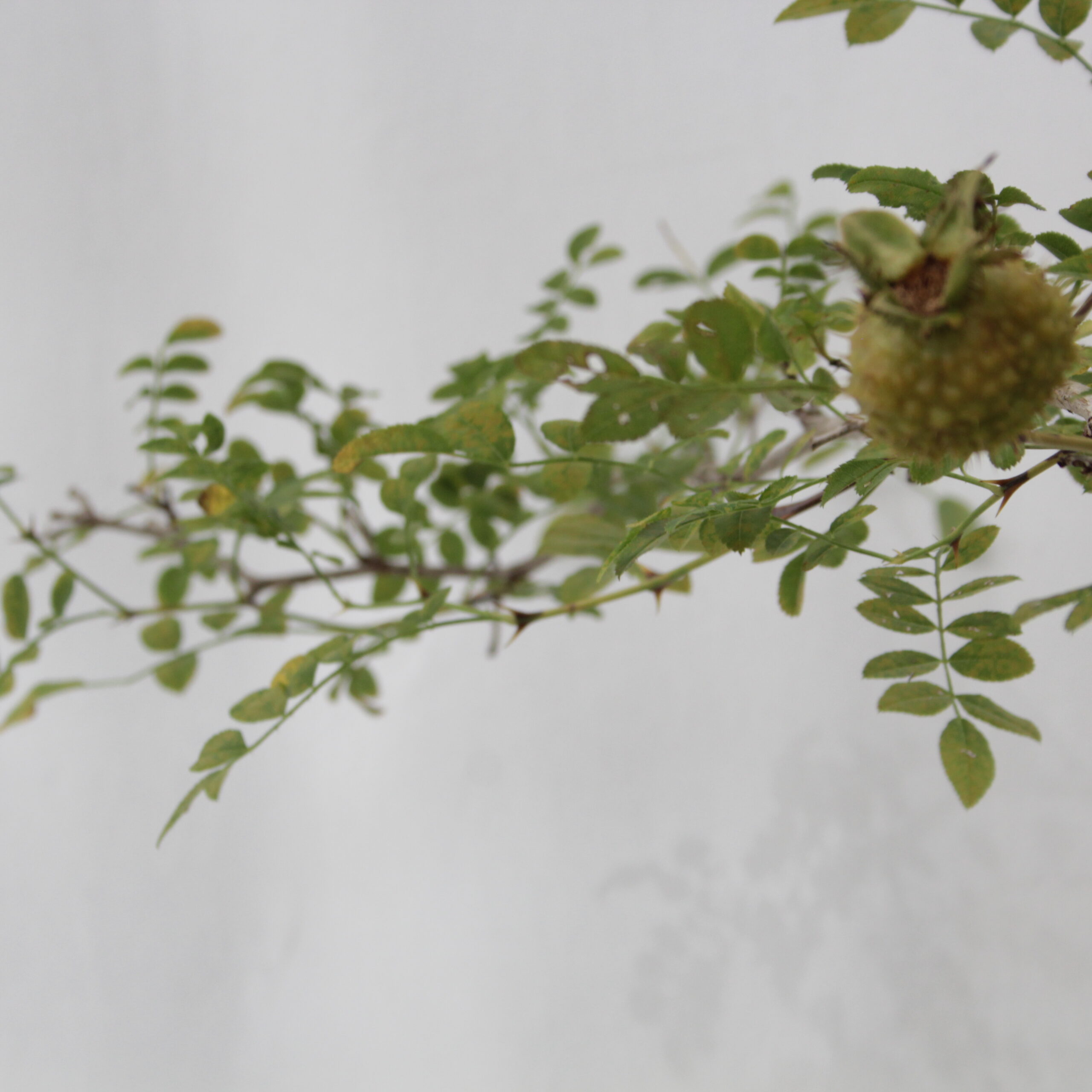
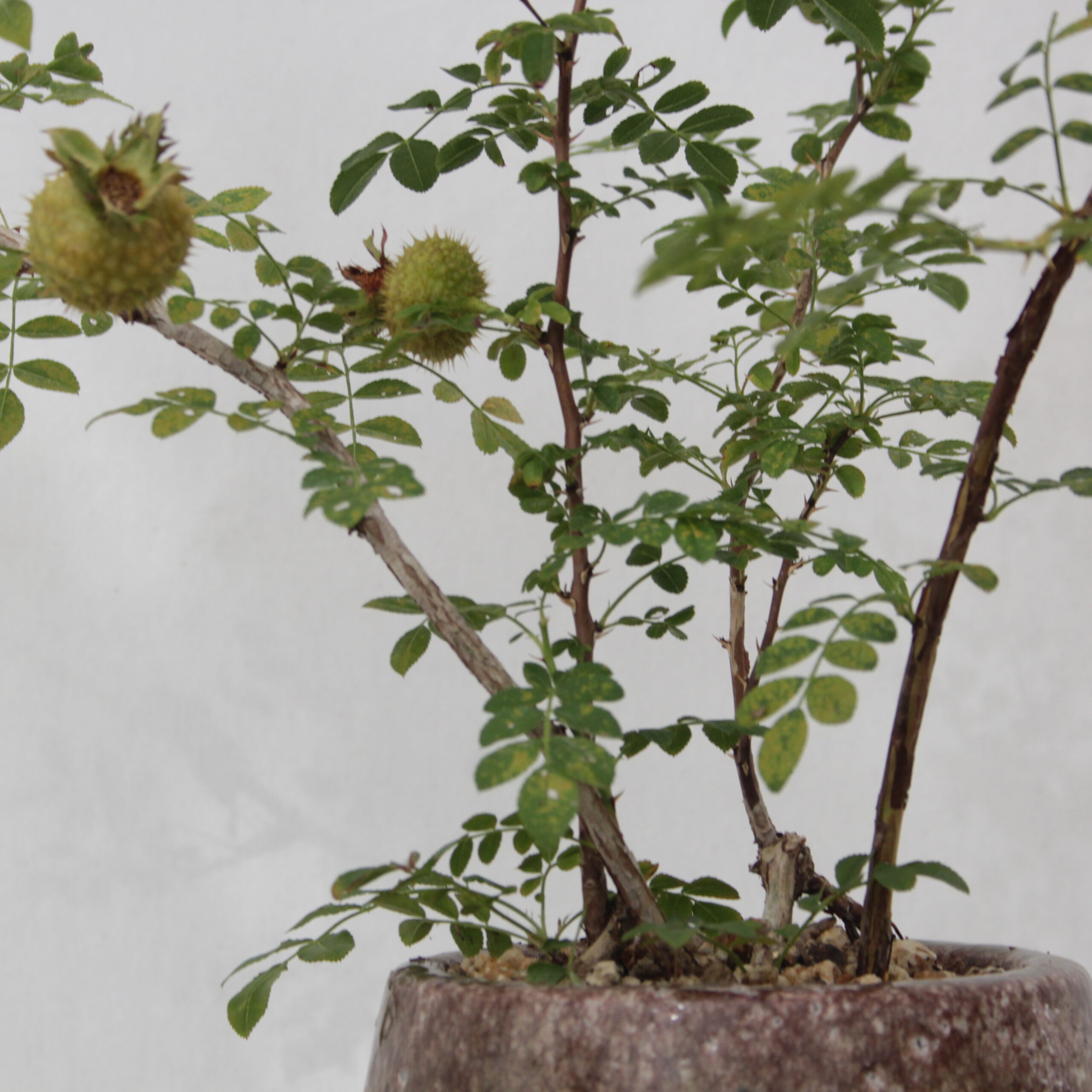
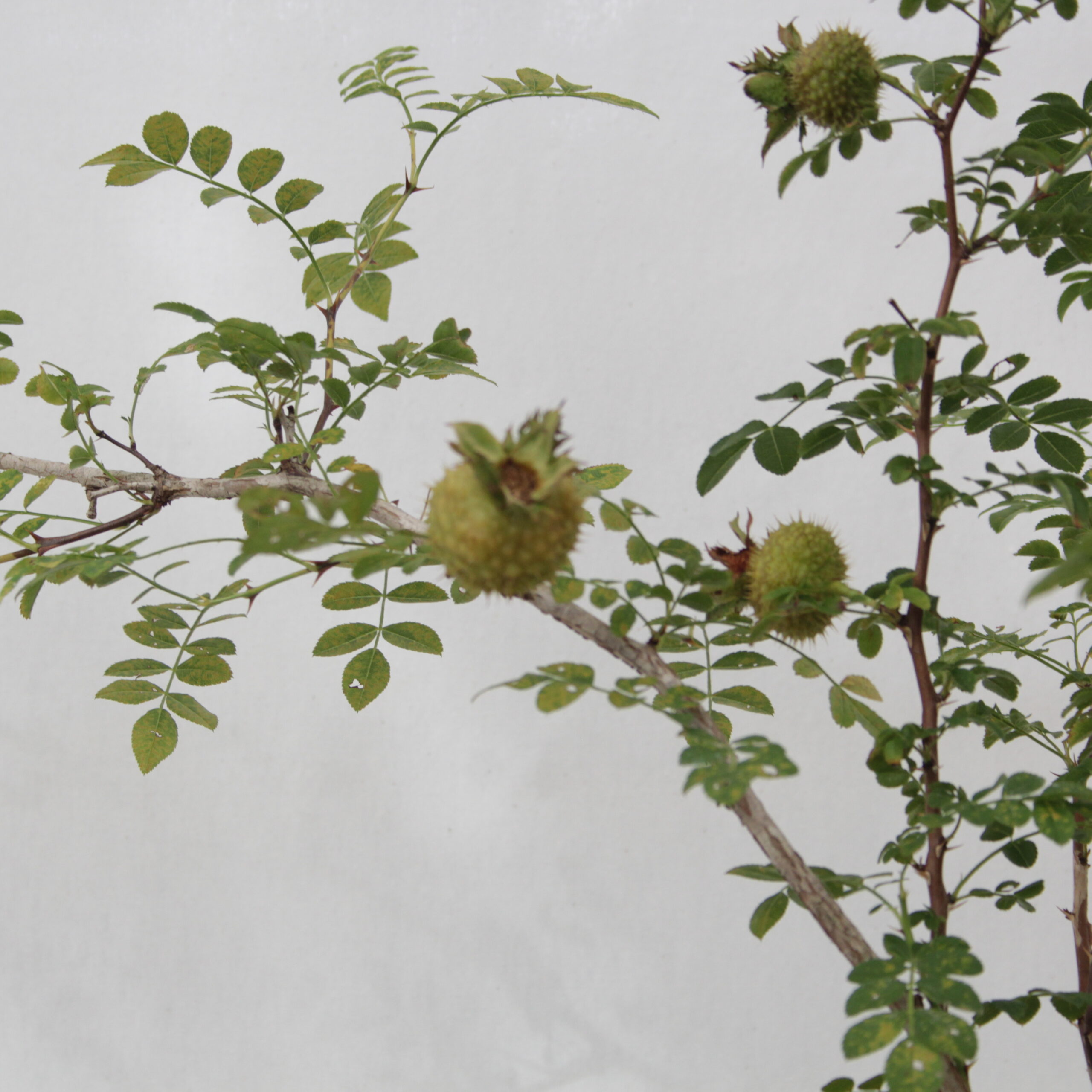
What makes all three varieties particularly stunning isn’t just the flowers—they have uniquely beautiful buds, fruits, branches, and thorns. The sepals that cradle the buds are sculptural; the pale-green, translucent prickles on the calyx and ovary grow in poetic sequences. The small-leaved foliage is fresh and light, more delicate than typical roses, and in autumn, the bright yellow, pufferfish-like fruit (hips) stands out. Branches have a bone-white texture, their bark peeling in a mesmerizing way, contrasting sharply with colorful new shoots. To focus solely on the flowers and miss this sculptural allure would be a pity.

Differences Among the Three Varieties

Here’s what I see in each variety:

1.Rosa roxburghii plena

A rose with many petals—the so-called Izayoi rose. It can bloom again later in the season, and the plant grows low and table-like. In my experience, it seldom fruits—last year I saw fruit, but no viable seeds. Some say plena is a variety or hybrid of R. roxburghii normalis, which seems quite likely.

2.Rosa roxburghii normalis 

Very similar to hirtula but native to China, and has a deeper pink color. It grows more upright and somewhat wild. If left to ramble, it reveals a kind of rugged beauty. Its shoots often stay green throughout winter.

    Most noteworthy is the abundant fruit: unlike hirtulanormalis holds its hips well into autumn, making it perfect for ornamental hip harvest. These hips have been used for over 400 years in Guizhou Province, China, where they’re known as 刺梨 (cìlí) or “tuli.” They are used in alcohol, sugar preserves, and as dried fruit. When eaten fresh, they are tangy, astringent, aromatic, and crisp—rich in vitamins C, A, E, and minerals such as Fe, Mn, Zn, B, Cu, P, K, and Ca.

    It grows well in areas between 500–1500 m in China’s climates with large day–night temperature changes.

    In my region of Kansai, Japan, the summer heat can be challenging for it, but mine still produces plenty. In Yamanashi, where I used to live, at around 900 m elevation, some winters were harsh enough to kill branches—its cold tolerance is weaker than hirtula. So for colder regions, I recommend growing hirtula instead.

    How to make dried rosehips from R. roxburghii

    1.Rub off thorns (wear gloves).
    2.Wash thoroughly.
    3.Remove stems and calyx, halve fruit and scoop seeds.
    4.Blanch until cooked.
    5.Coat with sugar and let sit for ~3 hours.
    6.Dry (I use a food dehydrator at 45 °C for 8 hours).
    Store in zip-lock bag with desiccant in the fridge.
    These hips have little sweetness naturally, so sugaring before drying helps. I found dried       hips more pleasant than sugar preserves, as the sugar dried reduces bitterness.


    3.Rosa roxburghii hirtula 

    This rose grows naturally in Hakone and around Mt. Fuji. It closely resembles normalis, but its petals are paler, with a subtle gradient that’s especially pronounced in cool climates. Its leaves have more leaflets and resemble Sansho (Japanese pepper) leaves. In winter, new shoots turn a lovely red-bean color. Its hips tend to drop early, so few remain in autumn. It’s notable for growing like a tree—up to 5–6 m tall—the only rose known to grow with such a tree-like form. Naturally from high altitudes, it’s not heat-tolerant, but can grow in warmer regions if planted in humid, shaded spots avoiding late-afternoon sun. In Japan, its hips haven’t typically been used for food, likely due to its natural habitat’s scarcity and the fruit’s tendency to fall early.

    There may be other differences I haven’t noticed yet. Also, the seedlings and nursery stock available in Japan and China may vary, so ongoing observation is important. Though these roses are closely related, each has its own distinct charm, and I hope everyone grows at least one in their garden—you’ll be amazed.

    Observing the Differences

    On a different note, I often wonder about the significance of observing these subtle differences. I believe noticing variation in plants is like listening—tuning in to what they are saying. Some may find that strange.

    Humans communicate through words. How can we communicate with plants? To me, observation is like a nonverbal conversation. By photographing roses, I vividly perceive each plant’s personality and keep discovering their charm. Only by sustained observation can we sense fine differences, and that skill is essential for cultivating them—and forms the foundation of our dialogue with plants.

    This makes me wonder if humans rely too heavily on words in our interactions with one another. Perhaps, beyond words, truly connecting means observing and noticing each other. Seeing differences is a way to understand someone else.

    Botanical Names, Diversity, and Adaptation

    I’ve been working with wild roses lately and realized that scientific names are just human-imposed fixes on what is inherently fluid. We assume a single “true” plant exists, but roses naturally hybridize in the wild, leading to many varieties. For wild roses, diversity is survival strategy—not competition. What remains is simply what adapts to its location.

    Roses themselves likely don’t desire rigid classification. That seedling-grown offspring diverge from their parents suggests a self-driven variation. It’s odd that humans cling to fixed naming while nature thrives on change. I believe it would be wonderful if we could embrace diversity as it is.

    As a nursery grower preparing seedlings for sale, I still recognize the importance of accurate scientific names—and sellers must take great care. Yet, I hope to transcend the name, broaden diversity, and offer more to gardeners. I’m producing seed-grown plants from species prone to variation. I can’t sell until they flower, but I think it’s a fascinating way to share wild-rose diversity.

    A Final Thought

    Through my reflections on the “Izayoi bara”, I realize what I’m seeking may be that slightly waning, imperfect beauty implied by the word “izayoi”: discovering beauty not in perfection, but in the fragile and incomplete. It’s about detecting those unspoken tones that drift around recognized beauty. I feel there’s never enough time, but I want to continue this journey as long as I have.

    There’s something plants are always telling me.
    It is this:
    Keep observing quietly.
    Keep acting quietly.
    Keep waiting quietly.
    Because the world does not change all at once.